


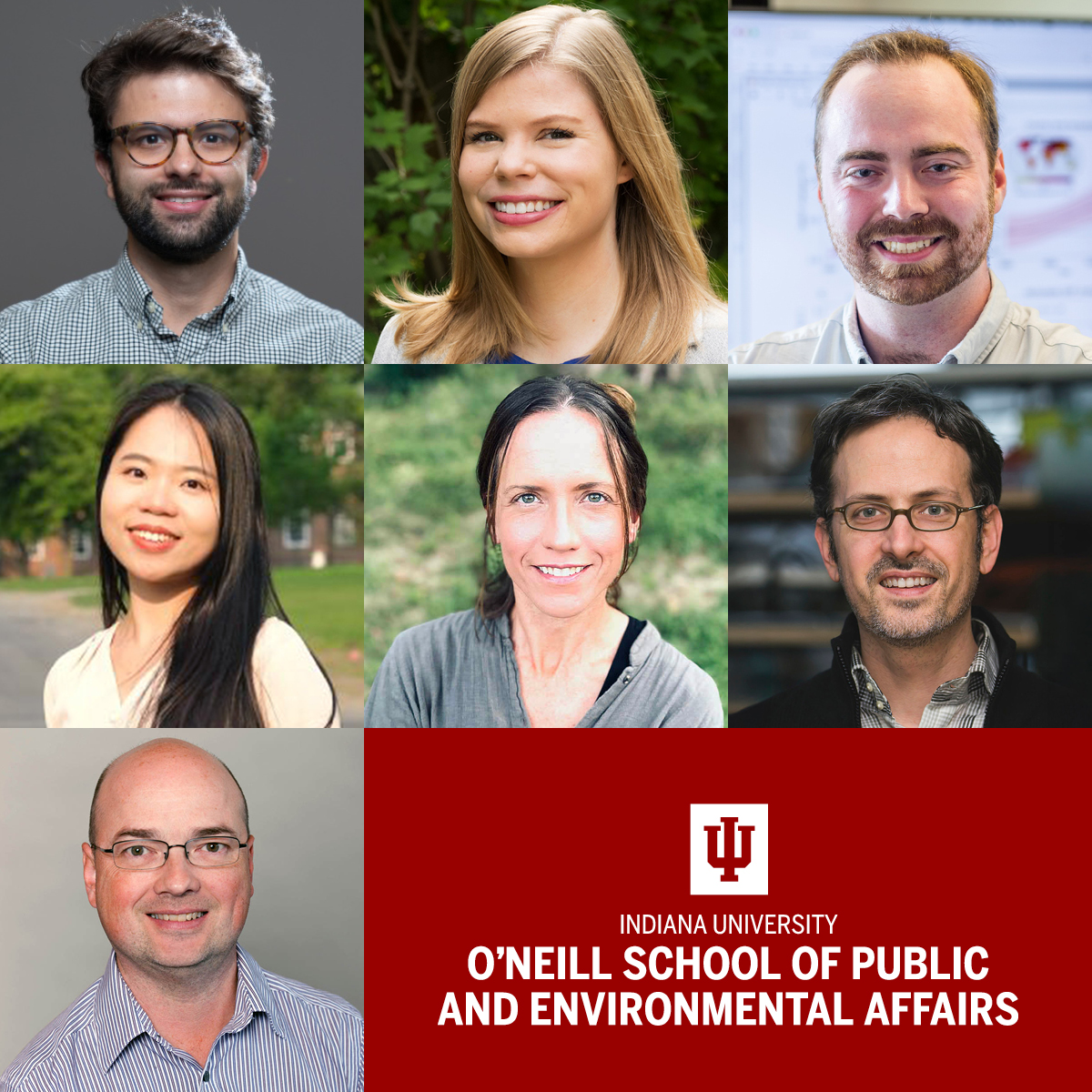
We credit our faculty for our top rankings—a recognition of their dedicated work tackling challenging issues, building partnerships around the world, advancing scholarship and research, and teaching our next generation of leaders.
Advancing research for the greater good
Listen to our podcast




















Publications that make an impact
120+Full-time faculty
#5in the nation for research productivity, Social Science Research Network
175+published articles annually
Better scholarship through collaboration
We actively seek and create collaborative opportunities for intellectually rewarding—and significant—research results.
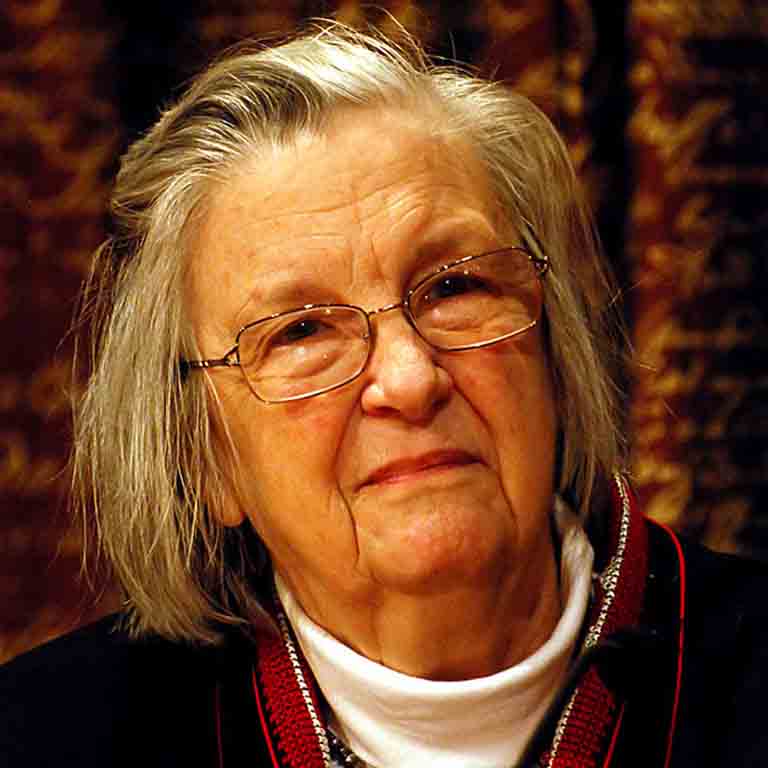
Elinor Ostrom, Nobel Laureate, 1933-2012
- Professor in the School of Public and Environmental Affairs
- Senior research director of the Vincent and Elinor Ostrom Workshop in Political Theory and Policy Analysis
- Distinguished Professor and Arthur F. Bentley Professor of Political Science in the College of Arts and Sciences
Ostrom received the 2009 Nobel Prize in Economic Sciences—the first woman to be so honored. Her groundbreaking research demonstrates that ordinary people are capable of creating rules and institutions that allow for the sustainable and equitable management of shared resources.
Nobel tribute to Elinor Ostrom
Description of the video:
Elinor Ostrom, Economic Sciences, 2009
- Girls at Elinor Ostrom's high school were discouraged from studying advanced maths.
- She was turned away by the college of economics. Ostrom's degrees are actually in political science.
- Her PhD study of shared water rights in LA set the stage for her lifetime's work in common pool resources.
- A fellow economist boiled Ostrom's approach down to a simple adage: "A resource arrangement that works in practice can work in theory." - Ostrom's Law
- Studying systems around the world, she collected strategies for managing forests, pastures and water locally.
- She then developed lab experiments to show how these rules could be applied more generally.
- Elinor Ostrom received the 2009 Prize in Economic Sciences for her analysis of economic governance.
- She was the first woman to receive the Prize in Economic Sciences.
- Elinor Ostrom's work gives us perspectives and tools to better manage our resources around the corner or around the world.
- "For the greatest benefit to mankind." - Alfred Nobel